Projects
(with Tim Johnson)
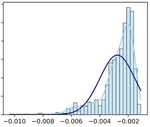
This paper examines the microfoundation of macroeconomic tail risk, defined as the frequency of extremely negative GDP downturns relative to what is predicted by a normal distribution. We demonstrate that firm-level productivity shocks, even when normally distributed, can be amplified into large macroeconomic tail events through a dynamic production-based input-output network, challenging the traditional view that only sufficiently large firm-level shocks impact the aggregate market. The evolving network structure, driven by technological shocks, hinders risk diversification across firms, delays the mean reversion of aggregate volatility, and causes volatility to cluster from local to global scales over time. In bad times, when idiosyncratic risks are high and firms treat all inputs as complementary, these risk spillovers can accumulate, resulting in severe GDP downturns.
(with Jonathan Brogaard)
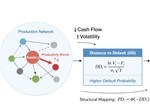
We develop a structural model of credit counterparty risk in which contagion arises from an inter-firm production network. We then propose a parsimonious empirical approach that directly incorporates network topology to predict credit spreads. We find that incorporating network edge features induces an average credit-spread change of approximately 21.8% and yields an incremental R2 of 0.56 in explaining credit spreads. Our results show that network-based counterparty risk is strongly priced and plays a first-order role in shaping credit spreads, particularly during periods when production networks experience severe disruption, reorganization, or rewiring. Network effects are especially important for firms operating in industries that occupy intermediate positions within supply chains, rely heavily on distribution and logistics, and face low substitutability of inputs.